

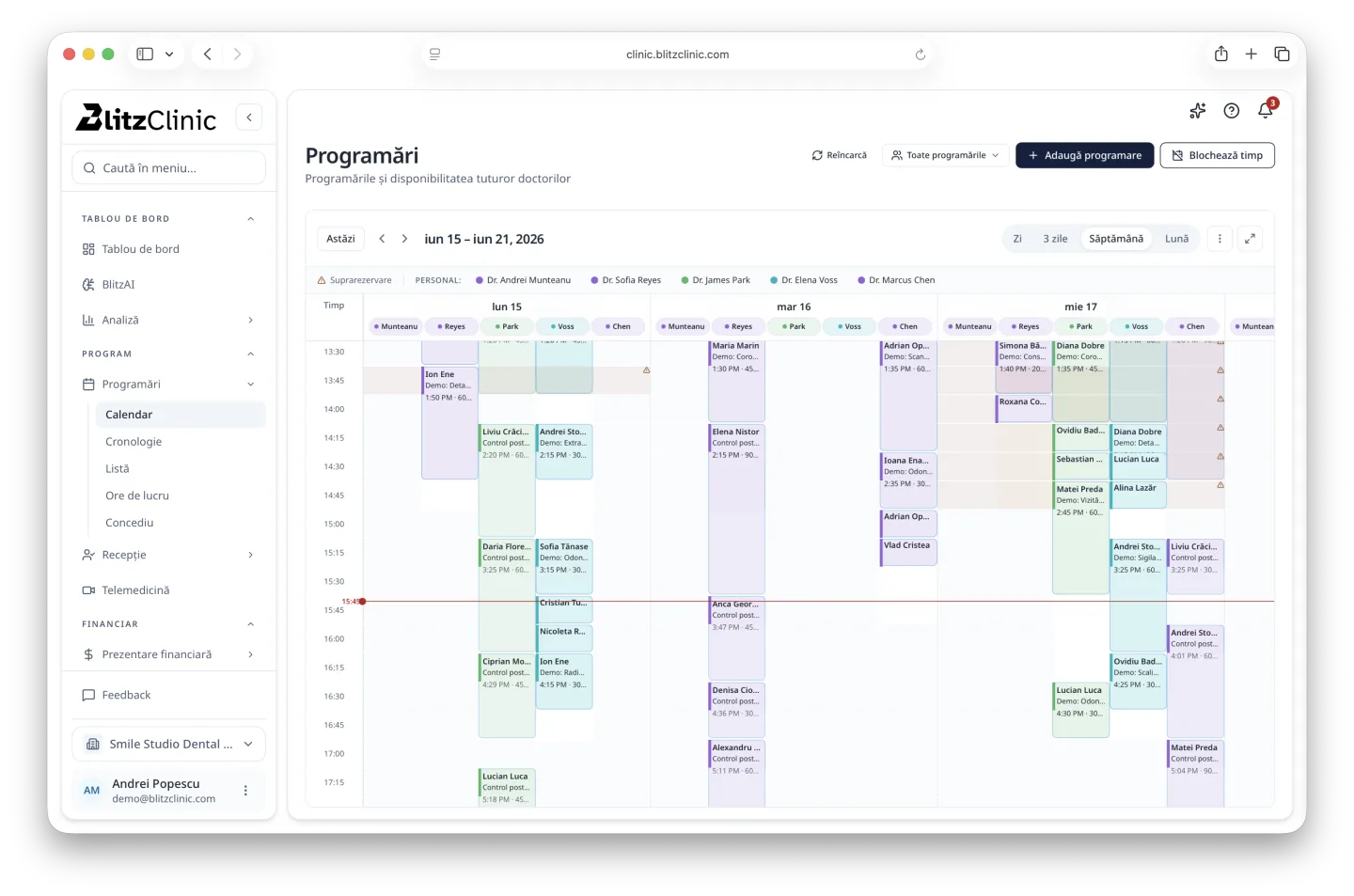
Medical recovery and rehabilitation rarely consist of one isolated appointment. Patients move through an assessment, a plan, repeated sessions, progress reviews, and adjustments. The software must help the clinic coordinate that sequence across therapists, rooms, equipment, documents, and payments.
Plan the course, not only the next visit
A standard calendar can book a session, but a rehabilitation clinic also needs to understand the treatment course: objective, recommended frequency, assigned services, responsible clinicians, completed sessions, missed visits, and the next reassessment. Staff should see what belongs together without rebuilding the sequence in a spreadsheet.
When several practitioners contribute, each one needs the relevant history and current plan. Notes should show progress and changes over time while preserving authorship and avoiding duplicated patient intake at every handoff.
Coordinate capacity and patient adherence
Rooms, therapists, equipment, and appointment duration affect the usable schedule. Reminders, easy rescheduling, and a clear view of the remaining plan help patients continue a multi-visit program. Managers also need to identify attendance gaps and unused capacity before the end of the month.
- Assessment, objectives, treatment plan, and progress notes
- Repeated appointments connected to one care journey
- Clinician, room, service, and duration-aware scheduling
- Attendance, reminder, rescheduling, and follow-up workflows
- Packages, invoices, balances, and operational reporting
Demonstrate a complete rehabilitation sequence
Use a test patient with an initial assessment, several planned sessions, one missed visit, a progress review, and a plan adjustment. Ask how staff find the remaining work, how another therapist receives context, and how the patient sees upcoming appointments and documents.
BlitzClinic combines patient records, treatment planning, scheduling, communication, documents, payments, and reports. Recovery clinics can use that shared context to keep repeated care organized for the patient, practitioner, reception team, and manager.
Recovery-clinic demonstration
Follow one patient through a multi-session plan, including a change.
- Create the assessment, objectives, services, and review point.
- Schedule the sequence while respecting staff and resource availability.
- Record progress without losing the original plan or previous notes.
- Handle a missed visit and communicate the revised next step.
- Show remaining appointments, financial status, and management reporting.
Make the care sequence visible
Good rehabilitation software turns repeated appointments into one understandable plan. The clinic coordinates resources more confidently, practitioners preserve context, and patients can see how each visit contributes to their recovery journey.